
In the workplace, a dismissal (the termination of an employee’s employment) can occur in many forms. One scenario is when an employee is sacked or stood down for behaviour that is classified as ‘serious misconduct’. As noted by Fair Work, if an employee is terminated for serious misconduct, the employer “isn’t required to give them notice of the termination” (Source: Fair Work Commission).
In this particular instance, questions often arise on what counts as ‘serious misconduct’ and whether or not the dismissal can be challenged. Let’s explore these now.
What Exactly is Serious Misconduct in the Workplace?
If an employee acts or behaves in a way that can be classified as ‘serious misconduct’, the employer may have grounds to dismiss them.
According to Fair Work, this can be behaviour that poses an immediate risk to the health and safety of others in the workplace, or conduct that directly affects the public perception, reputation, or profitability of the business itself.
In most cases, this behaviour refers to:
- Theft, fraud, assault or sexual harassment
- Being intoxicated at work
- Refusing to follow lawful and reasonable instructions that are part of the employee’s job.
- Wilful or deliberate conduct inconsistent with continuing the employment contract.
In simple terms, an employer can decide to fire an employee if the actions, behaviour, or conduct exhibited crossed the line into the territory of serious misconduct.
Can a Serious Misconduct Dismissal be Challenged?
Being dismissed in quick fashion can be a very unsettling and distressing experience for the employee at the centre of the situation. This is particularly true if the employee believes that their dismissal was unfair, or other factors are at play.
Eligible employees have the chance to submit an application to the FWC if they believe
- (a) their dismissal was unfair or a breach of general protections included within the Fair Work Act
- (b) they were dismissed for serious misconduct, yet can demonstrate that their conduct didn’t make employment during the notice period unreasonable.
Unless there are exceptional circumstances, an unfair dismissal claim must be filed within 21 days from the day the termination takes effect. You can learn more about this in our recent article.
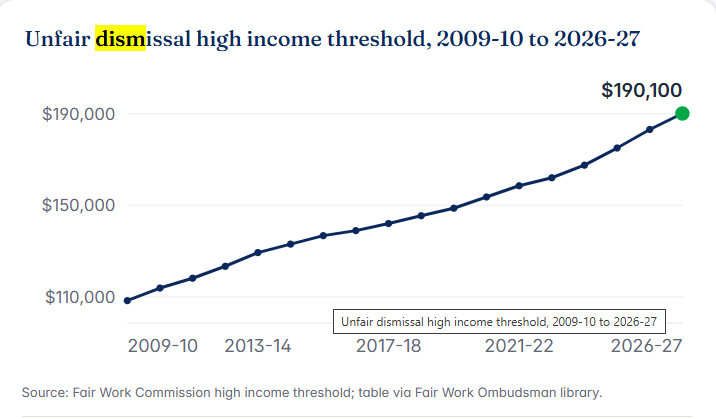
Upon termination, if it can be determined that the termination was not valid, then there may be some options for recourse for employees. Another important caveat is that unless they are covered by an award or enterprise agreement, an employee earning at or above the current high income threshold of $190,000 AUD cannot bring an unfair dismissal claim forward.
Source: Brookvale HR Solutions
At KW Lawyers, we have accredited specialists with expert knowledge of unfair dismissals and contracts of employment, as well awards, NES & entitlements. If you are an employee or employer and need legal advice, don’t hesitate to contact us today.
How Serious Misconduct Impacts the Notice Period
While a notice period is standard practice under the NES, there are also many other circumstances in which the same rules no longer apply.
These generally affect employees who are:
-
- Employed on a casual basis
- Employed for a set period of time or a season (such as a fixed-term contract)
- Fired as a result of serious misconduct (see the examples above)
- Taking part in a training arrangement and are employed for a set period of time or for the length of the training process
- Working in the building and construction industry, or the meat industry in connection with the slaughter of livestock
In section 786 of the Fair Work Act 2009, there are guidelines regarding a ‘Failure to notify or consult registered employee associations’. However, as also noted in the legislation, there are limits and instances in which this does not apply, including “an employee whose employment is terminated because of serious misconduct”.
What is a Normal Notice Period?
If and when it is deemed that serious misconduct has taken place, this naturally affects the amount of notice required. Let’s take a look at the typical process under the current National Employment Standards (NES)
Under normal circumstances, the employer is required to give formal written notice of the dismissal to the employee. This may also be delivered personally, left at the employee’s last known address, posted to the employee’s last known address, or sent electronically by email or text message (provided the employee agrees) (Source: FWC).
Note; If an award or enterprise agreement specifically defines it, the employee may also need to give their employer written notice.
Here is a quick guide to the minimum notice period required for different periods of service:
| Period of continuous service | Minimum notice period |
| 1 year or less | 1 week |
| More than 1 year – 3 years | 2 weeks |
| More than 3 years – 5 years | 3 weeks |
| More than 5 years | 4 weeks |
Source: Fair Work Commission ‘notice of termination and redundancy pay fact sheet’
Remuneration and Compensation
When an employee is dismissed, they are typically entitled to receive remuneration from the employer, provided they meet the right criteria. This can include:
- Outstanding wages or other remuneration still owed
- Pay in lieu of notice of termination
- Accrued annual leave and long service leave entitlements
- Balance of any time off instead of overtime that the employee has accrued but not yet taken
- Redundancy pay or entitlements if the employee has been made redundant and is eligible.
However, if serious misconduct has been alleged or is the reason for the dismissal, the amount of remuneration the employee receives can be impacted significantly. As noted by the Australasian Legal Institute “the FWC must reduce the amount it would otherwise order under subsection (1) by an appropriate amount on account of the misconduct.”
Paid Suspension and Being Stood Down
While much of what we’ve discussed has centred around employees that have already been dismissed, there is another key situation to consider–and this is a situation in which the employee has been stood down pending a workplace investigation.
A stood-down-with-pay suspension is when your employer tells you not to attend work, usually on full pay, while it investigates a complaint or allegation about your conduct. Naturally, this may crossover with behaviour classified as ‘serious misconduct’.
If you would like a more detailed overview of this topic, please refer to our recent article on ‘Paid Suspension vs Stand-Down: Explaining the Key Differences’
Need Expert Legal Advice? Speak with Kelly Workplace Lawyers
As you can see, employment disputes can be highly stressful and complicated, but we’re here to provide expert independent oversight, advice, and representation.
We have seasoned employment lawyers in Melbourne, Sydney and Brisbane who work hand-in-hand with employers and employees for a variety of different circumstances.
Kelly Workplace Lawyers offers a free 30-minute initial consultation if your employment has been terminated due to redundancy or other circumstances in the last 21 days. If you would like to book an appointment with us, please see our booking tab.
Our Team and Areas of Practice
Need assistance in any of the following areas? Contact us today to arrange a consultation.
- Unfair dismissal or unlawful termination
- Workplace discrimination or harassment
- Redundancy and severance issues
- General protections claims
- Enterprise agreement negotiations
- Disciplinary meetings and investigations
Our Principal, Joseph Kelly, is an accredited specialist in Workplace Relations by the Law Institute of Victoria. Together with Partner Gregory Romeo (who is recognised in Doyle’s Guide as a Leading Victorian Employment Lawyer), our team has a proven track record of casework grounded in a comprehensive understanding of current workplace legislation.